The Lore-keepers of Minas Tirith
The shadow of the enemy lengthens, and mankind retreats to the Tower of Guard. Inside the walls, the remnant people of the southern kingdom takes shelter. And with them, they guard a treasure more precious than gold or jewels — the preserved memories of a people.
First published in Edge of the Wild, vol. 3, issue 1 (Spring 2018), the publication of the Middle-earth Reenactment Society.
One would think a man so literary as Professor Tolkien would have lingered with his narrative in the bookish corners of the world. And yet he does not — while he spends long passages in the flowers and fields, he refers to the storehouses of knowledge only in passing. Nonetheless, we can make quite a few inferences from those few lines.
A hoard unnamed
We can of course assume histories made up a large part of the archives. Michael Martinez extrapolates from Tolkien’s own framing device of the Red Book of Westmarch, discerning there the existence of “maps, genealogies, annals, great accounts of ancient wars, and simple scrolls and treatises on matters such as healing, herb-lore, and other mundane areas…”
While less interesting to a storyteller, any city the size of Minas Tirith must necessarily have an archive of laws, tax records, estate ownerships, and so forth. Given the apparently feudal nature of Third Age Gondor, we can likewise assume fealty oaths, family sigils, records of grants and obligations, and similar records are kept in the archives.
Finally, the makeup of surviving works from elder days in our own real world imply a smattering of legal commentary, biographies, treasured plays, poems, and songs of elder days are preserved. The interested reader may choose to skim the Loeb Classical Library for a flavor of what sort of works mankind has treasured enough to preserve through millennia.
A learned office
We learn — unsurprisingly — that the Stewards of Minas Tirith are expected to be educated in their people’s history. Denethor boasts of his knowledge of the city, and while Boromir seems to have spent little time in study, Faramir is known by the men of the city as a well-read leader.
Further, we learn the archivists of Minas Tirith are referred to at least colloquially as “lore-masters” — but interestingly that only a handful of them are educated in the ancient language of their Númenorean forefathers: “scripts and tongues have become dark to later men.” That both Denethor and Faramir have at least some understanding of the old tongue seems to be somewhat unusual, even given their station. Compare this to the medieval era of our own real world, where an educated man until very recently was expected to know Latin, and perhaps Greek. In contrast, even the most learned of Minas Tirith will not necessarily have the tongue of their ancestors.
A forgotten tongue
Presumably, those “scripts and tongues” are composed in Adûnaic, the tongue of old Númenor. Adûnaic evolved from the language spoken by men of the House of Hador, allied to the Noldor elves during the War of Wrath. In its earliest days the language was heavily influenced not only by elven tongues, but also that of the dwarves — the latter accounting for its comparatively harsh sounds.
Over the long years of the Third Age, Adûnaic would meld with the tongues of other men in Middle-earth, and by the time of the War of the Ring would have become Westron, the common tongue spoken by the Free Peoples of Middle-earth.
Professor Tolkien spent comparatively little time on Adûnaic, but his son Christopher names this a blessing in disguise, as both history and basic grammar remained fixed in form. Sadly, only a skeleton vocabulary was invented, so the potential for extrapolative works is limited. Nevertheless, the Professor did compose a verse in Classical Adûnaic which no doubt would have been found in the archives of Minas Tirith: an excerpt from the Lament of Akallabêth.
So that is how Adûnaic sounded — what of how it was written? What was this script Denethor spoke of, that had “grown dark” to the eyes of later men?
Hitting the wall of the unknown
This is sadly a tricky question, as we must lean heavily on work the Professor did not complete for publication. We have one clue — Pippin’s blade from the Barrow-downs is adorned with “flowing characters of Númenor.” At the least, we have learned that whatever the final vision the Professor held of the Adûnaic characters, they were not the angular Cirth runes.
For quite some time I suspected that the script was a mode of tengwar, perhaps derived from the Beleriand mode of their elven teachers in Middle-earth. As Frodo — a well educated hobbit — could not decipher the Beleriand mode on the Doors of Durin, we could infer that a similar script would have been likewise illegible to speakers of the common tongue in Gondor.
Seeing a reference to “fragments of manuscript written in Númenorean script” in descriptions of the History of Middle-earth volume Sauron Defeated, I looked for the answer there. What I found on the listed pages was in fact an early draft of Professor Tolkien’s, in which Old English text is rendered in fairly conventional tengwar characters, using rules that would likely be mostly familiar to a Westron reader of the Third Age.
A detailed reading of Sauron Defeated adds a complication however, as buried in a footnote is the line “the texts seem to speak of the Adûnaic script as being only invented after they had dwelt some little time in the island.” As the tengwar characters long pre-date Númenor in published canon, we have hit an impasse. Did by “invented” the Professor mean merely that the Númenoreans adapted the existing elvish script to the sounds of Adûnaic? Or was it his intention that they have their own script, abandoned without trace sometime in the Third Age, but never found time to develop it? Or perhaps most simply — was his viewpoint character dating the script simply wrong?
Reasoning only from the fact that Adûnaic was not displaced in Eriador but rather evolved into the common tongue, I am inclined to guess that it was the Professor’s last intention that the same was true of their writing. Thus “Númenorean script” may have been merely a mode of tengwar rather than a unique character set in its own right. Forced to render something “period” in Adûnaic then, I would choose essentially the Quenya mode, looking to his Old English samples for reference in handling sounds foreign to the elven tongue — but that is a decision I would make with little confidence.
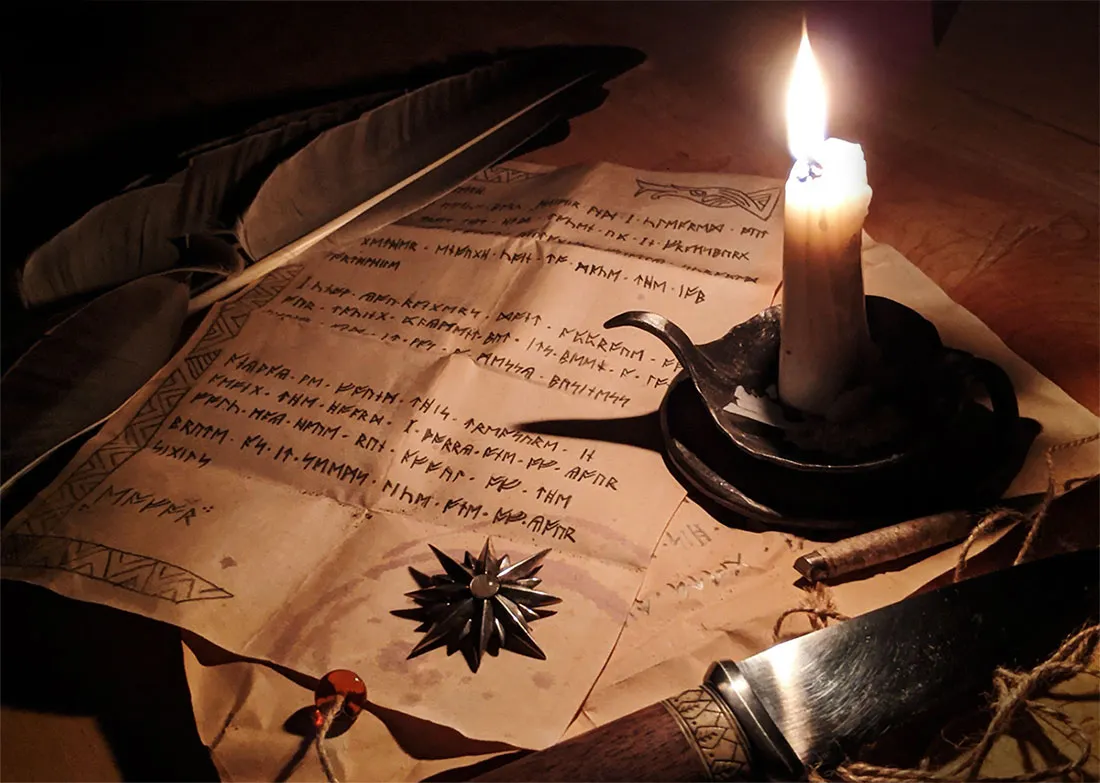
The shape of memory
Let us then move on to things more concrete: the actual form of the records in the archives of Minas Tirith. Here, at least, we are on firm ground. Faramir’s quote describing works recorded not only on conventional parchment but graven into stone and precious metals is particularly interesting, as there are clear historical parallels for these. Professor Tolkien would naturally have known of Sumerian clay tablets and surviving stone inscriptions of all sorts; the practice of engraving documents into metal was apparently less popularly known of in Tolkien’s time, but such artifacts are referred to in passing in works the Professor would almost certainly have come across.
…many things preserved: books and tablets writ on withered parchments, yea, and on stone, and on leaves of silver and of gold, in divers characters.
the two towers, iv.5
These relics of metal and stone seem to have been as exceptional records in Gondor as in our own world however: most records of Minas Tirith appear to be recorded much more conventionally, with parchment and ink. Interestingly, Faramir specifically refers to “parchment” scrolls — not the papyrus of ancient Mediterranean cultures. This does again roughly parallel the historical record: papyrus scrolls were used side by side with those of animal parchment for centuries, but were already being abandoned by the Roman era. We can likely assume the same of Gondor: perhaps a few papyrus relics of elder days crumble in forgotten corners, but what scrolls remain are of animal material.
The work of ages
We can safely assume that transcription formed a part of the lore-masters’ duties: over 3,000 years have passed since the founding of Gondor, and yet we know many records predate even that ancient time, brought by the Faithful fleeing the downfall of Númenor. In our own world the oldest scrolls known are the Dead Sea Scrolls, which at near 2,000 years old are incredibly fragile. Assuming documents of Middle-earth age similarly, someone must be preserving their contents before they are lost to time.
What are we to make of the Scroll of Isildur then? Could it be the original, penned by Isildur himself, kept intact by some elder magic? Or perhaps might it be a copy, penned only a few hundred years ago by some long-forgotten scribe? Without direct evidence, I tend to hold to the “copy” theory. That said, we know Narsil — a relic of the First Age — was still actively being carried by Aragorn thousands of years after its forging, so we cannot categorically rule out the survival of other ancient artifacts across millennia. Perhaps Gandalf did indeed hold in his hands a scroll penned by Isildur himself.
The Gondorian persona
We can reasonably assume that the average citizen of Minas Tirith would not have access to the archives of the city: even Gandalf finds himself “less welcome” and is permitted access to the materials only “grudgingly.” Nonetheless, some few must spend their lives in those archives. A lore-master of Minas Tirith would provide quite an interesting persona option. What better choice for the bookish Tolkien fan with a passion for combing through his more obscure notes and drawings?
… and thankfully perhaps, one needn’t even learn Adûnaic.
Afterword: the trail since
Almost all we have of Adûnaic is in The History of Middle-earth vol. IX, Sauron Defeated — the Notion Club Papers as a framing story of a writers’ club not unlike the Inklings, and Lowdham’s Report on the Adunaic Language, a detailed breakdown of the grammar. The grammar is remarkably well developed, but references to the written script are few and ambiguous: some scraps of an early inscription, believed to have marked “the first landing of Gimilzor, son of Azrubel, on the east coast of Anadune,” which “shows two different s-letters and z-letters” — and little more.
After learning of the Tolkien: Maker of Middle-earth exhibit at the Bodleian Libraries, I wrote to ask whether their staff knew for certain what the Professor meant by “Númenorean script.” An archivist with Special Collections kindly replied, in June of 2018, that “Tolkien’s manuscript material relating to Numenor is not yet available to researchers,” and that no further light could be shed. Until and unless someone in the future arranges search and perhaps publishing rights, it seems even the question “do we know if there is an answer” must remain itself unanswered.
The most parsimonious explanation remains that the “Numenorean script” was always intended to be some mode of tengwar. The alternative is to believe that while Adûnaic’s spoken form slowly pidgined into Westron, its written form completely died out without trace — and I think that is the sort of linguistic exercise so enticing to the Professor that if he had intended a distinct script, we would have seen bits of it ages ago. But if some scholar at the Tolkien Estate posts a “look at this!” picture next week with a whole new character set, I will be as excited and delighted as anyone.
LR II:2 (Council of Elrond); IV:5 (Window on the West); V:1 (Minas Tirith); V:10 (Black Gate Opens); Prologue, Note on the Shire Records. Sauron Defeated (HoME IX): Lowdham's Report, p. 433 n. 6; Adûnaic fragments, pp. 311–312; C. Tolkien's note, pp. 439–440. The Peoples of Middle-earth (HoME XII): Of Dwarves and Men. M. Martinez, “The Lost Books of Arnor and Gondor,” xenite.org.